Posts tonen met het label Comedy Analysis. Alle posts tonen

woensdag 25 februari 2015

Comedy Analysis: Wit and wordplay

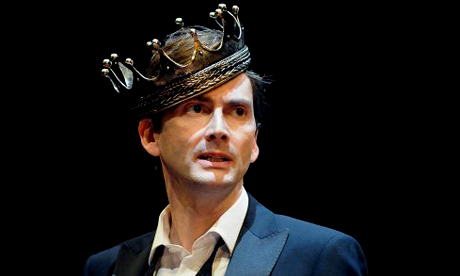
Old Will was a master of wit and wordplay
Did you hear about the guy whose whole left side was cut off? He's alright now.

Wit and wordplay are two distinct types of humour which are closely related. Both require some intelligence on both the listener's and the speaker's part. Wordplay is also often considered to be a form of wit, although this is sometimes disputed.

Wit is generally seen as an intelligent form of humour, wherein an intelligent statement of remark is made for comic effect. This may be in a sarcastic form or as a put-down. As such, wit can be outright mean or cruel, yet is still funny.

Wordplay requires some knowledge of language. A word is often used in manner where it gets a new meaning, or the meaning is ambiguous. A well-known example of wordplay is:

We'll have to rehearse that” said the undertaker as the coffin fell out of the car.

In this case the word 'rehearse' can mean practice, as the undertakers might have to practice handling a coffin without dropping it. I can also be interpreted to be re-hearse, as an undertaker's car would be a hearse, so putting the coffin back into the car, can be called 're-hearsing'. This is funny, since it's unclear which of the two meanings the undertaker is getting at.

Wit and wordplay have been around for hundreds of years. William Shakespeare was famous for both, as was Oscar Wilde. Today word play and wit are still prevalent both with comedians as with other people. Both are often used in advertising and branding. Also puns are increasingly popular, partly due to the rise of the Internet. Puns are also a form of wordplay after all.


With entire websites and Facebook pages dedicated to collecting the best wit and wordplay, this form of humour isn't going anywhere soon. Do a Google search for more, or keep an eye on this blog for more laughing matter!

woensdag 18 februari 2015

Comedy Series Review: The Office

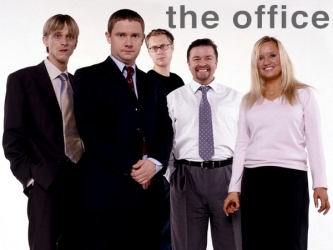
The Office UK
This is one of the British sitcoms that was successfully adapted to the USA. Nowadays both the British and the American version are well-known and loved around the world. Not only the USA has received its own version, also Israel, Sweden, France, Germany, Chile and French Canada have their own versions. There are distinct differences and common factors between all of these. Here we will focus on the USA and British versions, as these are the best known and otherwise this post wouldn't end.

Both the English and American versions deal with a paper merchant, the British company is called Wernham Hogg, the American company is Dunder Mifflin. The British Wernham is lead by regional manager David Brent, Dunder is at first led by Michael Scott, but later by others including Deangelo Vickers, Robert California, Andy Bernhard and Dwight Schrute. The UK and American version share the same universe, this is not sure about the other series. The American show ran for the longest time, with 9 seasons totalling 201 episodes. The UK series ran for 14 episodes over 2 seasons and a two-parter Christmas special. Both the American and the UK series received several awards. The UK version won 2 golden globes and over 20 other awards, the American version only received 1 golden globe, but won more other awards (including 5 Primetime Emmys) and had nearly ten times as many nominations.

The Office US
Both series were highly critically acclaimed and received high ratings. Although the UK version faced cancellation after the first airing due to low ratings, it has since developed into one of the most successful BBC shows ever made and was sold to over 80 countries.

Both the American and British series followed a mockumentary format, which includes the characters sometimes directly addressing the documentary crew behind the camera. This achieves comic effect, since their requests to cut something from the episode are never honoured.


The Office in both versions is a highly appreciated show, both of which had an incredible impact on the world of humour and comedy. Both have generated many spoofs and have obviously inspired many other series. Both are great shows, go check them out if you haven't seen them yet.

dinsdag 10 februari 2015

Comedy Series Review: The Simpsons

The Simpsons on their signature couch
The longest running American prime-time, scripted television series, longest running American sitcom and longest running American animated series, the Simpsons have managed to captivate their audience for over 20 years. Over this impressive run time over 500 episodes have been aired, the series received a star on the Hollywood star of fame, countless awards, a 9/10 rating on IMDB and a solid world-wide fan-base.

At the start of the series it distanced itself from other series by producing strong, character-focused stories as well as a unique style of animation. It was clever, witty and in many ways a classic American sitcom, which utilised the possibilities animation offers over live-action.

Later in the series, many people agree it was around or just after season 9, the story shifted from character-based to more situational and focused on antics, rather than character. Many people and critics feel this has negatively impacted the shows quality. Sydney Morning Herald's reviewer Jim Schembri summed up most of the criticism in one quote:

"The central tragedy of The Simpsons is that it has gone from commanding attention to merely being attention seeking. It began by proving that cartoon characters don't have to be caricatures; they can be invested with real emotions. Now the show has in essence fermented into a limp parody of itself. Memorable story arcs have been sacrificed for the sake of celebrity walk-ons and punchline-hungry dialogue."

Matt Groening, the show's creator, in 2010
Matt Groening, the shows creator, doesn't agree. He has stated the show is still new, as good or better than it's ever been and there is no creative reason to quit. As the show is still being watched by over 7 million people per episode and even more people watch episodes on-line, there is still a strong backing from the fan-base.

In 2007 the Simpsons Movie premiered and became a huge success. The film focused on the family having to leave Springfield after Homer causes the Springfield lake to become so polluted the government decides to cover the town under a giant glass dome, and later to destroy the town. It made over $500,000,000, with only a $75,000,000 budget.


Although there is a lot to be said for the criticism, the Simpsons is still a very enjoyable show. It is no longer the sharp and witty series of the 90s but is has evolved into the funny animated comedy series it is today. Still worth a look, the Simpsons are entertaining for the whole family.

zaterdag 7 februari 2015

Comedy Analysis: Humour in ancient Rome

Ancient Rome was more than gladiators and soldiers
The Romans, although not as funny as the Greeks, certainly did have humour and comedy played a part in Roman culture. There is a distinct difference though: where the Greeks had jokes that were rather similar to today's jokes, Roman jokes were a lot different. A joke that was wildly praised in Roman times went as follows:

The scenario for the joke is the trial of Milo, accused of killing the infamous, wildly unpopular, controversial aristocrat Clodius.
Milo's defence lawyer (Cicero) was asked this question: What time did Clodius die?
Cicero answered: "Sero."
The punchline “Sero”  it a Latin word with two meanings. It can be either 'late' or 'too late'. In this scenario therefore, Cicero answered both that Clodius died late in the day, probably late afternoon or in the evening, but also that he should have gotten rid of long ago, as he died 'too late'. This was considered a hilarious joke in Roman times as it connected to a true story, supported many Roman's views on Clodius and had what was considered to be a strong punchline. Roman jokes were very different from ours and most people nowadays wouldn't enjoy Roman jokes. Some words were by themselves considered to be hilarious, like the word stomach. Nowadays most people wouldn't laugh when you just say stomach.

Roman comedy plays however were much like sitcoms today. Their plays intended to give a humorous image of the everyday life. Some situations were exaggerated, or absurd situations were introduced for humorous effect. Some recurring themes were the family’s father falling in love with the same woman as his adolescent son. Usually this woman was a prostitute which resulted in dealings with the brothel owner, who had no morals whatsoever. The family mother would become irate as soon as she found out about her husband’s love interest, resulting in him being dragged off stage by the wife. This was a form of entertainment most people nowadays would find humorous and it has aged much better than the normal stand-alone jokes.


Although Roman humour as a whole didn't age nearly as well as its Greek counterpart, they did make an admirable attempt and perhaps it's just due to our lack of understanding of the sophisticated Roman culture that we don't find it that amusing. Its still interesting to see though, that even in a humour-climate as different from ours as the Romans, there still are links and similarities. Maybe we will learn to appreciate the jokes as our society and culture matures, we'll see. 

zaterdag 31 januari 2015

Comedy Analysis: On-line comedy

Dr. Horrible's Sing Along Blog is a free to watch
comical webseries  
With the rise of the Internet and websites such as Blip.TV, Channel 101, Youtube.com, Escapist Magazine and Dailymotion.com, many people now have the possibility to upload and share their own work. Also because of the computer and the increasing availability of high-quality cameras and microphones as well as easy-to-use cheap (or free) editing software, many people are now able to upload their own hilarious work. This has helped create a thriving comedy subculture on the Internet.

Because (almost) everybody is now able to share their content, there are countless videos available where people show their comedic talents (or lack thereof) for the entertainment of the world. Parodies are among the most popular genre on the Internet. Television series, songs, films, other Internet celebrities, nothing and no-one is safe from the Internet comedians. Some great Internet comedians include Nerdcubed, The Key of Awesome, Epic Rap Battles of History, How it should have ended, Smosh, Channel Awesome and Thug Notes. The latter is not so much classic comedy; he provides summaries and reviews of famous literature in a true 'thug, gangsta-style' speaking in slang and appealing to a younger audience. His way of story telling and analysis is hilarious though.

Not only is the Internet a way to broadcast comedy, it is also a source of inspiration. On line comedians inspire others and as such the community keeps growing. But also the Internet itself is a source of comedy. There are more songs, sketches and mockumentaries about Twitter, Facebook and Myspace than there are stars in the sky,

Part of the success of on-line comedy is because the Internet is not only easily accessible, but comedians can even make money. On Youtube alone there are dozens of content creators who make upwards of 1 million dollars per year with their videos. Outside of Youtube there are even more, not all become millionaires but there are thousands of creators who make a living through creating and sharing content using the Internet.


To sum up, the Internet might be the greatest thing that ever happened to comedy and humour. People have more sources, more inspiration and can share and broadcast their work easier than ever before. Go try it, you might become the next on-line superstar!

woensdag 28 januari 2015

Comedy Analysis: Non-verbal humour

Visual, non-verbal humour: the object is in an unexpected place
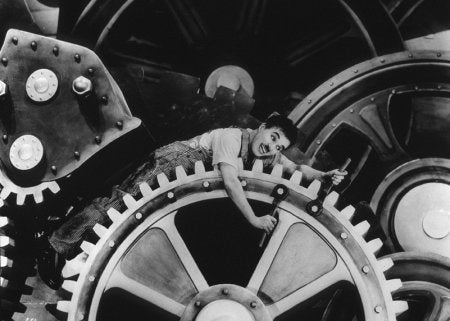
Non-verbal humour, also known as visual humour, is a form of humour and comedy that doesn't use dialogue, or uses minimum dialogue. This form of comedy was extremely popular during the days of the silent film. It is however, still very popular and can often be seen in series, films and even commercials.

Many visual humour depends on the comedian using his body as a tool. By doing funny or unexpected things with a body, hilarity can be achieved. A technique that's often used, is the use of clothing that doesn't fit well. Having clothes that are a size or two too large or too small help create a character for the comedian.

Objects, as well as humans and animals, can become funny by following one of more of the rules of visual comedy. These are:

1 – an object can become funny when it behaves in an unexpected way
2 – an object can become funny when it is in an unexpected place
3 – an object can become funny when it is the wrong size

An example of number 1 is an object that comes to life, or a human behaving like an animal (and vice versa). Number two can for instance be a car on the roof, a banana on the head or a horse in the kitchen presser. Number three can for instance be a giant sandwich, such as in the Young Ones, where a woman gets squashed under a sandwich the size of a couch. In this scene the non-verbal humour is made funnier by a verbal remark: Neil, the vegetarian hippie, who complains the sandwich isn't vegetarian with a complete deadpan expression.

Charlie Chaplin used non-verbal humour to great effect
The comedian can also combine 2 or 3 of these rules in order to achieve hilarious scenes. They should keep in mind though, that combining 2 or 3 rules, doesn't necessarily make something 2 or 3 times as funny. If done well however, a combination of the rules can result in absolute hilarity.

Animated comedy is able to push these rules to the extremes. In animation it is possible to have a double-decker bus do a somersault, have a cat grow to 500 feet in height or have objects appear or disappear at will.

A lot of visual comedy works with slapstick and violence. These forms of comedy are as old as comedy itself and, since they don't require much dialogue, they were immensely popular during the silent film era. They are these days still used in any medium you can think of. The reception of pain by the comedian can be made funny by using a deadpan face or by means of understatement or exaggeration.

 Visual humour can also be achieved through absurd situation. In general, the more absurd and astonishing a situation or object becomes, the funnier it can get. For instance a banana that bends away from the mouth when someone wants to eat it, is funny. A banana that bends away, leaps to the ground, grows 300 feet high and wreaks havoc is funnier, because it is absurder and it utilises rules 1 and 3 (and possibly 2, depending on its location).


In visual comedy there is one constant: somebody (usually the comedian) suffers. Therefore the visual comedian is a constant victim. He is however indestructible. He can take whatever the humour throws at him but will survive in the end. Humour never dies.

zaterdag 24 januari 2015

Comedy Analysis: Mockumentary

This is practically a mockumentary
Mockumentary is a portmanteau word from “to mock” and “documentary”. It is therefore a mocking documentary. Generally the mockumentary will follow fictional events and show them as in a documentary, thus creating a parody.

In a mockumentary some care if usually taken to create the atmosphere and 'feel' of a real documentary.  This means there is usually no laugh-track, a lot of (semi-) improvised lines and 'reconstructions'. All this helps to create a true documentary feel.

One of the most famous, recent examples of mockumentary film is Borat: Cultural Learnings of America for Make Benefit Glorious Nation of Kazakhstan. This film presents itself as a documentary, but is in reality a spoof, with little informative value. Is is funny though.

Mockumentaries are closely linked to pseudo-documentaries, although they are not the same. The main difference being a mockumentary is always a parody and therefore always funny. A pseudo-
The Office is a mockumentary
documentary is not necessarily funny, although it can lead to laughable results. A prime example of this is Orson Welles' War of the Worlds which was aired on radio styled as a news bulletin. This was so realistically done, that people believed the world to be under alien attack and it caused massive outbreaks of panic. Although the intent of the broadcast wasn't comedy, the results were without a doubt hilarious.


Mockumentaries are becoming more common and more popular every day. With series like The Office crossing the Atlantic and finding success on both sides, Arrested Development is still popular, years after the original television broadcasts and Come Fly With Me was the most-watched British comedy of 2010 with over 10 million viewers every episode. For a 6 episode series, this is impressive. Mockumentaries are a refreshing way of looking at comedy and because they're not too common it would seem it's going to stay that way for a while.

woensdag 21 januari 2015

Comedy Analysis: Medieval Humour

A Jester
The Dark Ages are called that for a reason, and people don't generally associate this era with comedy. However, the Middle Ages were more important to modern-day comedy than most people realise. This was the era when the meaning of the word comedy changed. Before it had been strictly limited to theatre with a happy ending, now it also started to encompass poetry and literature and later on more or less every type of art. This opened the door to the current state of comedy with humour in every medium.

The most famous form of medieval humour may well be the jesters. Employed mainly at the courts they provided entertainment in the form of songs, stories, jokes, acrobatics etcetera. They would also comment on the current state of affairs or contemporary events. Because of the nature of their acts, they can be considered the very first stand-up comedians.

Another strong influence on comedy was the Feast of Fools. This is one name given to a series of festivals organised by the church. On these festivals the lower clergy members were allowed to make fun of their superiors. This resulted in comedy plays, songs, poems etcetera being shown. Also burlesque likely originated here. This feast disappeared during the 15th century, as it was considered to be obscene and objectionable.

During the 12th and 13th century the Elegiac comedy arose. The Elegiac poems were written in a very upper-class form of Latin and the writers enjoyed showing off their skill in Latin. These poems were however always about low-profile, or unimportant subjects. The contrasting high Latin and low subjects result in hilarity.


Although the Middle Ages are not generally associated with humour but as shown, this is unjustified. The Middle Ages were more than just people being hung, drawn and quartered: they formed the start of an upwards development in culture and society as a whole, leading to where we are now. 

zaterdag 10 januari 2015

Comedy Series Review: It ain't half hot mum

The Royal Artillery Concert Party
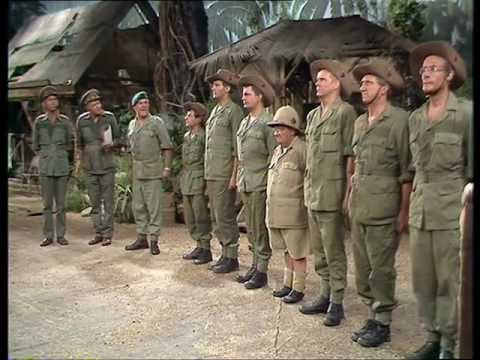
This is one of the classic war-comedies produced by the BBC. With 52 episodes broadcast between in 8 seasons between 1974 and 1981, it was the second British sitcom to be set in World War II, after Dad's Army. This series focuses on a Royal Artillery Concert Party, that travels through Asia to amuse the troups fighting the Japanese.

As is customary in the army, all members of the group have nicknames and generally only addressed by their nicknames. The group consists of: “Shut up”, “Lofty”, “Parky”, “"La-de-dah" or "Paderewski", “Atlas”, "Nobby", "Nosher", "Solly" and "Gloria". “Shut up” is the commander of the unit and the only 'real' soldier. The rest are draftees and don't want to be in the army, but are happy to not have a fighting position.
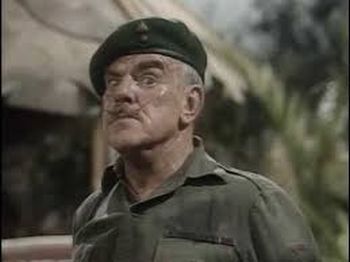
Sgt. Shut Up

Tudor Brynne 'Shut Up' Williams is the sergeant-major and day-to-day commander of the group. He has been a professional soldier most of his life and hates being assigned to work with the concert party. He is often seen shouting at the men in the manner of a drill sergeant and is usually working on schemes to get the group disbanded and assigned to front-line positions. His schemes are always thwarted by the men, often with the help of the officers, even though the officers aren't always aware of what they're doing.

Colonel Charles Arthur Digby St John Reynolds is the most senior officer in the concert group. He is a huge fan of the group's work and always enjoys the shows. He is a solicitor which in all probability makes him the highest-educated officer in the group. He is the stereotypical British officer with a stiff upper lip and proper appearance and behavior. He is generally good-natured and tries to keep his easy life behind the lines at all costs. He thinks his life as a soldier in Asia is very hard, although he spends most of his time in a well-ventilated office sipping gin and he indulges in luxury dining with the elite.

Captain Jonathan Tarquin 'Tippy' Ashwood is the second-in-command in the group, but is an absolute twit. He has about as much military bearing in him as a cucumber and he is a huge fan of the show, in particular the drag-acts. Due to his position of authority and his lack of wit he is often manipulated by others to achieve their own goals. He is also known to often unintentionally ruin other's plans and he is pretty much useless when it comes to solving problems. His catch-phrase is “It's a tricky one, sir” which is his standard answer anytime the Colonel asks him for his input.

Bombardier 'Solly' Solomons is a highly intelligent, Jewish, soldier who always plays the male lead and is the party's producer. His main goal is to stay away from the front and he remained successful in this right up to his going back to England after the second series.

Gunner (later Bombardier) 'Gloria' Beaumont is a very effeminate man and a huge coward. He considers himself an artist and feels he doesn't belong in the war. He has difficulty adapting to the heat, mosquitoes and violence that comes with army life in India.

Gunner 'Lofty' Harold Horace Herbert Willy Sugden is a tiny man, with an amazing tenor singing voice. Even 'Shut up' can't resist his voice when he's singing. He is although often ridiculed for his appearance, especially by the Sergeant-major and he is always picked as 'volunteer' for nasty or dangerous tasks.

Gunner 'Parky' Nigel Parkins is the youngest member and possibly major Williams' son. As a result he is Williams' favorite and is often complimented by him. Huge blunders such as destroying the officer's mess (instead of clearing up the mess) are easily forgiven. He has no exploitable talent for the actual show so he is appointed the company clerk. The other men like having him in the group, since they figure the Major would want to keep them all safe as long as his son is with them.

The show's title card for the first 2 seasons
Gunner 'Paderewski' 'La-De-Dah' Jonathan Graham is the pianist. He has a university degree in English literature and speaks in a very upper-class accent. His education and accent are reason for Shut up to constantly mock him. His intelligence is often relied on by others – including the Major – to get them out of sticky situations. His plans often fail however, leading him to utter his catch-phrase “oh well, bang goes that theory”.

Gunner 'Atlas' Mackintosh is the party's strongman. He is very masculine and a little short-tempered. He is however good at heart and copes with the situation to the best of his knowledge.

Gunner 'Nobby' Clark is not the smartest of the party and often makes funny but useless comments. He has a whistling act and can do a marvelous bird imitation.

Gunner 'Nosher' Evans has a paper tearing act, and eats a lot. He often talks with his mouth full, spraying food on whoever he's talking to.


This series is a classic for good reason. Making fun of the army is, especially in Britain, a sure recipe for success. The British soldiers interaction among themselves and with the native 'Wallahs' is hilarious. The series wasn't repeated too much on British television due to the controversy over Michael Bates, an Indian-born white actor playing one of the natives. The series was repeated in other countries though and has had several DVD releases which had the success they deserved. 

woensdag 7 januari 2015

Comedy Analysis: Improvisational humour

Robin Williams was a master of improv
Although many comedy films and series are scripted, improvisational humour is an important genre of comedy. This can be either completely improvised, or improvised to an extent with some script to give guidance.

The oldest documented form of improvisational comedy is the Atellan farce in ancient Rome. It is known this form of improvisational theatre was invented in ancient Greece, although little is known about the Greek form of improv. The Roman version of this theatre involves actors spoofing the way of life of the poor classes, from an upper-class perspective. Often the act was full of vulgar and rude humour, as the upper classes viewed the common people as uncivilized and simple-minded.

Around the 16th to 18th century, the Commedia d'ell Arte took shape. Heavily inspired by the Atellan Farce, this was a form of improvisational theatre popular in Italy during this era. The full name of the art form is Commedia dell’arte all’improvviso, or “Comedy of the very creative ability of improvisation”. This name clarifies the improvisational element in the shows. The Commedia d'ell Arte featured a lot of character humour, often ridiculing stock characters, such as the old man, the soldier, the commoner etcetera. These shows were generally performed on the streets on temporary stages, free of charge. They were sometimes funded by the city the performance took place in and other funding resulted from passing the hat after a show.

Improv Everywhere
Today improv is a popular type of humour, used in television series (often with an audience) as well as films, where actors are sometimes allowed to improvise (part of) their lines. Also dedicated improv groups have been established. The most famous possibly being Improv Everywhere who have gained international fame through the Internet. They often perform in the streets in the form of 'flash-mobs' or spontaneous plays. Their actions are generally very lightly scripted in order to achieve a predetermined result.

On British television some of the BBC's most popular shows include improvisation to some extent. These include Mock the Week and Have I got news for you. Both these series generally feature a panel of comedians who improvise their work on the spot. This makes for hilarious television and no episode is the same. Another popular BBC series is Outnumbered where the actors (in particular the child actors) improvise their lines after a few instructions from the producers.

Improv is not only a powerful tool in humour, but is also applicable to normal everyday life. Several well-known comedians, including Tina Fey and Stephen Colbert, have described life as the most important improvisation of all, as it is the same as improv in comedy: there are no lines, you have no idea what's going to happen and the rules of society tend to keep us from our creative self. By letting go of the rules, people can achieve greatness.

So there you go, humour is not just for laughs, its principles can be applied to real life as well. Humour is useful!

zaterdag 3 januari 2015

Comedy Analysis: Humour in video games

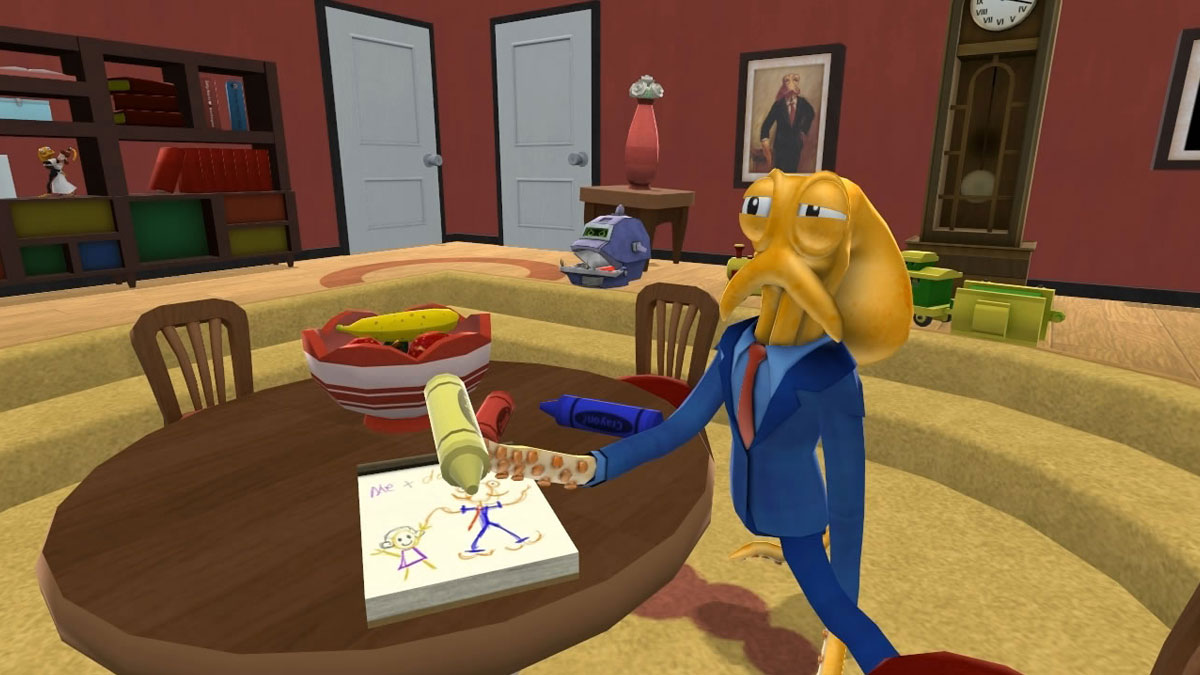
Octodad: Dadliest Catch
Although humour is not a given in contemporary video games, there are certainly games out there that are full of humour, sometimes on purpose, sometimes unintentionally. In this post we will dive into humour in games.

Deadpool

Deadpool is a Marvel superhero who is known for the humorous comics. Now there is a game about him, it was inevitable there would be humour in there as well. Although some of the humour can be seen as childish, tacky and even slightly sexist, this game does tickle ones laughter bones and even if you don't like tacky humour, there is enough funny to be found in this beat 'em up.

Octodad: Dadliest Catch 

Octodad: Dadliest Catch is a game that was obviously made with comic intent. The protagonist is an octopus dressed in human clothes. Your challenges include putting on make-up, doing garden work, walking through hallways full of obstacles and putting a wedding ring on your bride's fingers. The humour is in that Octodad is incredibly hard to control. This results in limbs flying in every direction but the one you want him to go. Slapping people, crashing surrounding objects and hurting Octodad every step of the way. The slapstick in this game is sublime and when played in multi-player (where every player controls one or more separate limbs) adds to the hilarity.

Qwop

Qwop

Qwop is somewhat comparable with Octodad: Dadliest Catch albeit in a somewhat simpler form. It's a flash-based game which can be played for free on-line. The goal is to run 100 meters, whilst controlling all four limps separately with the Q,W,O and P buttons – hence the name. This too is nigh impossible.

Easter Eggs in Video Games

Many games, such as Borderlands and GTA feature funny 'Easter eggs'. These are little winks put in the game as a gift to the player. This can include characters from other franchises, links to a different world/universe, or (as is the case in GTA IV) a giant beating heart which can be found in a statue resembling the Statue of Liberty.

Claptrap is the comic relief in Borderlands and Borderlands 2

Humour in Boring Games 

Another form of humour used in video games is the type of humour that can be found in games like Papers Please and Cart Life. In both of these games you play someone who has a mind-numbingly boring job. Where most games let you become a race-car driver, criminal, police officer, soldier or something cool, these games let you play as a street vendor and an immigration officer respectively. This means you have to repeat the same action over and over again with increasing difficulty and seemingly little result. These games are hilarious through the apparent uselessness of your work.

Unintentional Humour 

Many games also feature unintentional humour. This can be in the form of glitches, bug and programming errors. This can result in floating objects, characters being able to walk through walls or fall through the floor, or make sporadic and funny movements. Youtube is full of videos highlighting brilliant glitches from famous games.


Video games are full of humour if you know where to look. There are far more games that feature excellent humour, some of them free, some paid, but all hilarious in their own way. Humour in gaming is on the rise again and we welcome it!

woensdag 31 december 2014

Comedy Analysis: Humour in literature and poetry

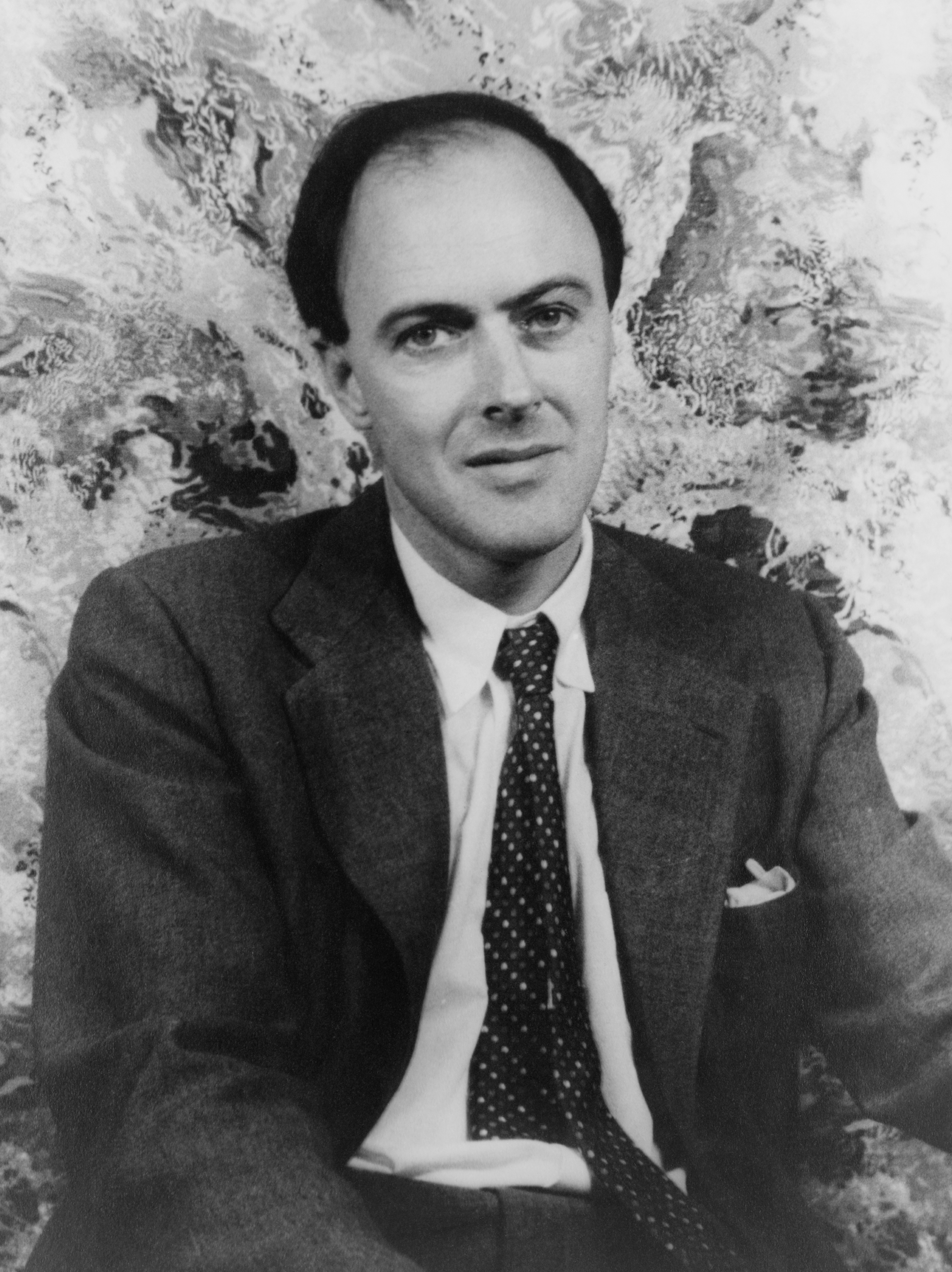
Roald Dahl
Humour has been around as long as mankind itself. Due to the lack of television, radio and the Internet during most of history, comedians and humorists have had to find other ways to broadcast their witty banter and hilarious ingenuity. Literature and poetry have proven a fertile ground for humour and has been used extensively throughout history for comedic purposes.

Elsewhere on this blog William Shakespeare has been mentioned and he is likely to come up again in the future, so we will not go too deep into his work here. We will mention however that he wrote many pieces of hilarious work which closely resemble contemporary humour. These include sitcoms (Merry Wives of Windsor), yo mama-jokes (such as in Hamlet) and slapstick (in nearly all his comedies and in a lot of his other work as well). He is worth a read and by no means deserves the bad reputation he has among many schoolchildren.

Besides old Will, there are many more respected authors who took to poetry to vent their funny antics. An example is Lewis Carrol, who wrote a poem about his love for soup (Beautiful Soup) and even the early twentieth century writer T.S. Eliot wrote a poem about Macavity, the feline master criminal (Macavity – The mystery cat).

Roald Dahl, known for several brilliant books also wrote a hilarious poem: The Pig. The main character is Piggy, a big and smart pig, who is able to read books and make calculations without the aid of a scrap paper or calculator. He is frustrated because he doesn't know the answer to one question:

“What LIFE was really all about.
What was the reason for his birth?
Why was he placed upon this earth?
His giant brain went round and round.
Alas, no answer could be found.”

I won't spoil the ending, so go read this hilarious poem! The link is below this post.

Charles Dickens
Literature is also full of humour outside of poetry. A classic example is Charles Dickens' Hard Times – For These Times which is full of satire. When we go into very classic literature we end up with the Odyssey. Although this is an epic drama, there is definite humour in there. A prime example is the moment where Odysseus blinds Polyphemus (the cyclops) and Polyphemus screams. When his brothers ask him who hurt him, Polyphemus responds “nobody hurt me” because Odysseus told him his name was nobody. Although this was probably written in the 8th century BCE, this is often considered an early form of humour.

Poetry and literature are full of humour and it really is a shame most teachers don't use humour more frequently in their literature classes. As with everything, literature is more fun when humour gets involved. Happy reading!


Links for further reading:
http://100.best-poems.net/macavity-mystery-cat.html
http://100.best-poems.net/beautiful-soup.html

http://100.best-poems.net/pig.html

zaterdag 27 december 2014

Comedy Analysis: Humour in Ancient Greece

A person went to a doctor and said “Doctor, whenever I get up from sleeping, I'm groggy for a half an hour afterwards and only after that am I all right” To which the doctor replied: “Get up half an hour later.” - Philogelos (The Laughter Lover)

Philip of Macedon
This is one of the jokes that survived the ages. It was a joke told by the ancient Greeks and is remarkably similar to the jokes we would tell today. In fact, a major part of Greek humour, often over 2000 years old is very similar to our own comedy and humour today. The Greeks invented the parody, the comic drama, they ridiculed their politicians, made fun of their gods and wrote manuscripts and books containing jokes, which were even bought by king Philip of Macedon, who was Alexander the Great's 17th great-grandfather.

Besides the written joke-books, comedy was often portrayed through plays. This is possibly the best-known form of Greek comedy. This form of Ancient Greek humour is generally divided in 3 categories: Old, Middle and New humour. Although these terms are not necessarily chronological and most scholars agree old humour was common and evolving all throughout ancient Greece, they do roughly correspond with the order of ‘invention’ of types of humour.

Old humour encompassed sharp political satire and an abundance of innuendo. The innuendo was not only sexual, but also often scatological in nature. Also political attacks were sometimes disguised as humour. Not much material has survived the passing of time, but there are still enough works left to get an image of what Old humour would have been like. Some of the most famous writers of Old humour include Aristophanes, Hermippus and Eupolis.

Middle humour is the least clearly defined chronologically, scholars differ in opinion on when exactly it started, but the general consensus is it was later than Aristophanes, but before Menande. Middle humour is different from Old humour in the sense that the ridicule started to become more general, as opposed to the more direct ridicule in Old humour. Also there was little to no impersonation of public figures and recurring characters became more developed. Plays based on Middle humour were performed as far as Sicily, indicating they had significant influence on literature and culture in the ancient world.

Plautus
New humour was mainly popular during the Macedonian rule, mainly after the death of Alexander the Great in 323 BC. New humour lasted till approximately 260 BC. In this era the humour became highly sophisticated and the sexual innuendo from Old humour became frowned upon. Love became an important subject in comedy and there came a greater focus on the ordinary person’s life. Most comedians started painting an image of family life which was as ordinary and realistic as possible, but with a humorous twist. This is similar to the Roman comedy of the same era. Also love became a real theme for the first time in comedy and this inspired artists for centuries to come. Shakespeare for instance was inspired by Plautus’ work.


Greek humour is surprisingly similar to today's humour as is known around the world. Even the joke about the 3 nationalities (Englishman, Irishman and Scotsman and all the variations to this) was common in Greece. Also the 'smart servant' jokes which were used by Shakespeare and by many comedians throughout history were already in use among the Greeks. It's interesting to see how many similarities there are in humour even through 2000 years of history. This also gives hope that humour can indeed promote understanding between peoples and cultures. If 2000 years of history and development can be bridged by humour, then certainly a few miles between two countries can be overcome. 

woensdag 24 december 2014

Comedy Analysis: Facial humour

The man with the rubber face
The face is one of the most powerful instruments in the world of comedy and humour. By using specific expressions, or by not using them, comic effect can be achieved. Some comedians have made the face their speciality or trademark. Rowan Atkinson is even nicknamed "the man with the rubber face", due to his ability to use differing facial expressions and deadpan in his humour.

A well-known version of facial humour is deadpan. This is derived from the slang meaning of 'pan' which is face. Therefore deadpan is a 'dead' face i.e. a face without expression. This is used for comedic purpose when delivering a statement or punchline. Leslie Nielsen was an expert in deadpan. His use of deadpan in the film Airplane! is legendary.

Leslie Nielsen's Deadpan
The opposite of deadpan is exaggeration. Here the comedian makes an exaggerated expression for comic effect. This can for instance be a grimace of incredible pain, when the comedian was only slightly nudged or a face of incredible joy over something small. Rowan Atkinson frequently used exaggeration in his Mr. Bean character.

Another form of facial humour is to make an expression which does not suit the actual emotion in the least. For instance a happy face at a funeral, though (or maybe because) it is inappropriate, can be funny. (In comedies ONLY, do NOT attempt this at a real funeral!).

The final form of facial humour we will discuss here is the act of making a weird or funny face, unrelated to the surroundings. This is a technique used by many comedians, as well as by 'normal' people. This can be hilarious when done right and can often be seen in photo-bombs, at parties, stand-up comedy acts and in many films, series and on the streets.


Due to the many possibilities of the face (most probably haven't even been mentioned here) it is a truly powerful tool of comedy. You can try it at home, take a ridiculous picture, upload it to the Internet and see the responses flood in!

zaterdag 20 december 2014

Comedy Analysis: British sitcoms

Man about the House
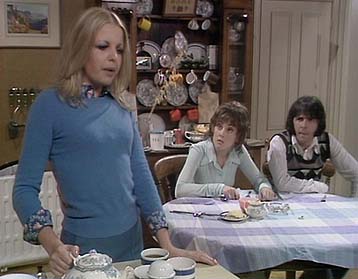
British sitcoms on TV have been around since even before American sitcoms: Pinwright's Progress, was aired from November 1946 till May 1947. This makes it nearly a year older than the first American televised sitcom. Although there are many similarities between American and British sitcoms in that they both focus on a family, workplace or other institution and have largely the same character types, there are distinct differences as well.

The first major difference is the amount of episodes per series. Generally British sitcoms air less than 10 episodes per series or season, whereas in America it is usual for seasons to consist of around 20 episodes. Also many British sitcoms are produced for the BBC, which has no commercial breaks during broadcasts and limited commercials in between programmes. This allows for a full 30 minute run time for sitcoms, whereas American sitcoms generally run for 22 minutes, to accommodate 8 minutes of commercials.

Another key difference is the number of writers. US-made sitcoms are often written by a team of a dozen resident writers, sometimes even more, whereas British sitcoms are generally written by 2 or 3 writers, who are often also the creators and (executive) producers of the show. This results in a different type of show with often a more consistent storyline.

Peter Capaldi in The Thick of It - a modern British sitcom
British comedies often follow a topical storyline which incorporates cultural developments and recent real-world events. Often the sitcom comments on these happenings. A well-known 1970s sitcom is Man about the House, which shows, and comments on, the changing role of women in society. During the 1980s the young generation started revolting and demanding a more equal role in society. This was portrayed by sitcoms, which started the 'alternative comedy' genre. The best example of this is possibly The Young Ones which follows a group of 4 students who share a home and each take the place of the classic sitcom characters: Neil is the mother, Vyvyan and Rick are the teenage children and Mike is the distant father.

With many British sitcoms gaining huge popularity abroad and some being remade for American TV, they are among the most successful types of comedy around. And much like American sitcoms they are here to stay.


"Why isn't my life like a situation comedy? Why don't I have a bunch of friends with nothing better to do but drop by and instigate wacky adventures? Why aren't my conversations peppered with spontaneous witticisms? Why don't my friends demonstrate heartfelt concern for my well being when I have problems? ...I gotta get my life some writers." -  Bill Waterson (Author Calvin and Hobbes)

woensdag 17 december 2014

Comedy Analysis: Character comedy and stereotypes

Ali G.
Character comedy is a form of comedy where the comedian takes on the role of a character, much like an actor, but with a funny effect. Stereotypes are often exaggerated depictions of certain peoples,
cultures, religions or other groups. The two forms of comedy often coincide, when the comedian takes on the role of a stereotypical character.

A form of stereotypical comedy which is especially popular in the UK and Europe is the depiction of (former) soldiers or military officers. Also the depiction of stereotypical law-enforcement officers is popular. Often the depiction of police officers includes some reference to dictatorships, fascism or national-socialism. Also both the police and military are often shown to be of questionable intelligence.

Another famous example of a stereotype is Sacha Baron Cohen's portrayal of Ali G. He is a stereotype of the typical (British) white (generally working class) male who imitates the rap culture as well as the reggae and hip-hop cultures. He pretends to be much more streetwise and 'gangster' than he really is and hangs out with people much like himself. Characters like these are a sure source of hilarity.

Michelle Dubois in 'Allo, 'Allo!
In British comedy stereotypes are highly popular. Not only foreign or other specific groups are targeted, the Britons are remarkably fond of stereotypical British characters. Some examples include Basil Fawlty and most of the British characters in 'Allo 'Allo! who are generally portrayed as over-the-top British with exaggerated accents. In the same series however, there are also stereotypical French, German and Nazi characters.

American comedy often uses stereotypes such as rednecks, Mexicans (and other Latinos) and people from specific cities, such as New Yorkers who are often depicted as New Jersey-hating, coffee and bagel-loving, Yups. Also the police is often stereotyped as incompetent, lazy, coffee-drinking and donut-eating. This is prominently displayed in series such as The Simpsons where Chief Wiggum is all that. American stereotypes are often regarded to be less complicated than British stereotypes although that is not always true. Stereotyping has been around for centuries and doesn't seem to be going anywhere soon, so we had better learn to appreciate them, even when we find ourselves on the receiving end.


zaterdag 13 december 2014

Comedy Series Review: Arrested Development

Michael: “Tell me the truth. There's been a lot of lying in this family”
Lucille: “And a lot of love.”
Michael: “More lies.”

There's probably no better way to summarise the relationships within the Bluth family than the above quote. The Bluth family is the main family in the American classic Arrested Development. With the head of the family, George Bluth Sr indicted after years of “creative accounting” his son, Michael Bluth becomes the de facto head of the family and the Bluth corporation. Michael's authority is constantly being undermined by his incompetent and selfish older brother George Oscar 'Gob' Bluth. This leads to hilarious situations where Michael is desperately trying to do the good thing and keep the family together, while the rest is trying to fend for themselves.
Michael is a widowed single father, who has one son: George Michael Bluth. George Michael has many of the positive characteristics his father has, but is also less connected to the rest of the family. Throughout the development of the series, Michael's bad sides become more and more apparent and he is often seen ignoring his son's feelings and becoming more selfish and detached from the family.
Lucille Bluth, the family's mother
The series gets a lot of it's hilarity from the voice-over who tells the story in a dry manner and is often disillusioning whenever a positive development seems to come up. Also there are a lot of running jokes, such as George senior mentioning there is 'money in the banana stand'. After the banana stand is burned to the ground, he reveals he meant this literally: there was $250.000 cash lined in the stand's walls.  After finding out Michael burned the stand down, George Sr. becomes infuriated, trying to strangle Michael and demanding to know how he could be clearer when saying “There's always money in the banana stand”. Another running joke is a family member stating “I've made a huge mistake” whenever they get themselves in over their heads.
The story features a lot of 'archive footage' and 'home videos' which were often made with a handheld camera to create a feel of amateur videos. These are often used in flashbacks to the family's past, often before the series started. This sheds some light on the character's background and the family history.
The Bluth family, left to right:
GOB, George Sr. Lindsay, Tobias, Michael, Lucille, George Michael, Maybe, Buster

Because most of the family's assets were seized pending the investigation into George Sr.'s accounting, they are forced to live in a model home, which was intended for viewing and as such doesn't have real plumbing or a sewer connection. Also most of the furniture and appliances are cardboard models for show only and don't really work. This doesn't exactly contribute to the family's bonding. Also most of their cars have been seized, leaving them with only a stair car, which was originally used for boarding the private plane. The plane had also been sold to help deal with the financial trouble. This odd mode of transport contributed to many hilarious scenes as it was used to break people out of prison, take down homecoming banners and for promotional purposes during election campaigns.

The dysfunctionality of the Bluth family and their complex internal relationships with secrets everywhere make for a hilarious sitcom. With 68 episodes already aired, a 9.2/10 rating on IMDB and the creator hinting on a film and fifth series to come, this series is here to stay. And so it should.

woensdag 10 december 2014

Comedy Analysis: American sitcoms

The cast of Married... with Children
A staple of contemporary comedy, American sitcoms are gaining numbers and popularity around the world. The American sitcom has been around since 1926, when Sam 'n' Henry was first broadcast on WGN radio in Chicago. The first televised sitcom was Mary Kay and Johnny which premiered on 18 November 1947, on DuMont Television Network. Later is was moved to CBS and later to NBC. It was also the first show to show a couple in bed and the first show to feature a pregnancy. This was because Mary Kay became pregnant and as the attempts at cover-up were unsuccessful, the writers decided to write it into the show. The show was also broadcast live at first, but was later recorded and aired after production. As the show's sponsor wanted to know if it was worth investing money into, but there were no viewing statistics yet, they devised a simple way to test the waters: during one of the commercial breaks a spot was aired offering a free pocket mirror to the first 200 viewers who wrote in. As a precaution the company bought 400 mirrors, in case the audience was larger than expected. After airing only the one spot, the company received nearly 9000 requests for mirrors. Therefore the sitcom was regarded to be a success in viewer figures.

Later sitcoms follow largely the same format focusing on a family and their daily antics. Some sitcoms follow a miserable family, or a miserable family member (Such as Married... with children), whereas other sitcoms follow more of a funny or comedic family (such as The Simpsons or Family Guy). Especially animated sitcoms often feature more absurd humour or over-the-top hilarious situations.

American sitcoms also often incorporate slapstick and sarcasm into the series. Not every sitcom these
The cast of Community
days focuses on a family, although the classic roles of family members are often filled in by other characters. For instance Community follows a study group on Greendale Community College. Increasingly the 'old-fashioned' one-camera sitcoms are returning. The one-camera technique involves a single camera filming the entire series, rather than 3 or more cameras filming with the best scenes then edited together. Some modern single-camera shows include Scrubs, It's always sunny in Philadelphia and Arrested Development. Also the mockumentary sitcom is on the rise. These include series such as The Office and Modern Family, which are made to look like a documentary, but with a comedic effect.


The American sitcom is still undeniably among the most popular forms of comedy around. Many are broadcast around the world and repeated often. Some of the most legendary gems of comedy are sitcoms, such as The Cosby Show, Seinfeld, The Simpsons and  I Love Lucy. This is a genre in comedy worth preserving.

woensdag 26 november 2014

Comedy Analysis: Shakespearean Humour

William Shakespeare
William Shakespeare is often considered to be the greatest playwright and one of the greatest writers in the history of the English language and the western arts. Something he isn't always given enough credit for is his comedic work. His plays were written mainly with the common people in mind and as such feature two prominent themes: sex and violence. Not unlike today, those were the two things that sold very well to the mainstream audience. Although the word “comedy” had a different meaning in Elizabethan times than it does now, there are similarities. Comedy back in those days was used to refer to a play with a happy ending. Shakespeare did however use jokes and creative insults in his plays, which can be compared to modern-day comedy.

Shakespeare's comedy had strong similarities with contemporary comedy and sitcoms. Some examples of recurring elements in his plays are: a focus on situation rather than character (such as in a sitcom), a clever servant (such as in Blackadder III) and use of every type of comedy, including slapstick, wit, puns, deadpan and practical jokes. This results in writing that is still hilarious today, despite Shakespeare having a reputation of being boring among especially the younger generations, which is evidently not deserved.

Shakespearean insults

A great source of comedy are the insults Shakespeare uses. He was generally very creative in his insults and went way beyond the occasional 'idiot' or 'moron' often seen in today's comedy. He does on occasion use maternal insults (the modern equivalent would be a 'Yo Mama-joke').

            Demetrius: "Villain, what hast thou done?"
            Aaron: "That which thou canst not undo."
            Chiron: "Thou hast undone our mother."
            Aaron: "Villain, I have done thy mother."
-        Act IV, Scene II of Titus Andronicus

On occasion Shakespeare does comment on someone's intelligence, such as Menenius telling Brutus to shut up with the following sentence:
           
            “God-den to your worships: more of your conversation would infect my brain, being the            herdsmen of the beastly plebeians: I will be bold to take my leave of you.”

Shakespearean wit

Hamlet is full of hilarious wit
Besides his creative insults, Shakespeare is also known for his great wit and word-play. Hamlet is full of witty remarks and banter by our hero, such as when Osric says “tis very hot”, as an excuse for not wearing his hat, Hamlet makes him say "It is indifferent cold, my lord, indeed," and the next moment again that "it is very sultry and hot."

This kind of witty banter makes Hamlet in particular an amazing read with unexpected comedy around every linguistic corner.

A Slap Stick

Shakespearean slapstick

Although slapstick is often associated with early cinematic comedy, it is much older than that. Shakespeare incorporated slapstick into several of his plays, most notably in The Comedy of Errors where he used a lot of slapstick and mistaken identities for comedic effect. He ensured people would not feel sorry for the slapstick victims by focusing more on the situation, than the actual character, much like a sitcom does nowadays.

Shakespeare has left behind a legacy like no other writer. Even people who haven't read or seen any of his plays or who aren't interested in literature and theater usually have some idea who 'Will' was. His influence on comedy and writing in general is unprecedented and impossible to measure. If you haven't seen or read any of his work, go check it out, you will not be let down.


Trivia:

Shakespeare was credited in the Blackadder series on the BBC as “Additional dialogue by William Shakespeare”.

If you want to see a Shakespeare play, but quicker, look up the Reduced Shakespeare Company, who are able to cram all of Shakespeare's play in one evening show.


zaterdag 8 november 2014

Comedy Analysis: Comedy in Music

'Weird' Al Yankovic in 2010
Humour in music is one of the oldest forms of humour. Ever since the dawn of music, it has been
used to tell humorous stories, and over the last decades this has only increased. Especially with the rise of the internet and sites such as youtube.com and blip.tv where users can upload and share their own content the amount of humorous songs and parodies has sky-rocketed.

A prime example of a comedian singer who had made his breakthrough through Youtube, is Bo Burnham. This young talent started in 2006 and signed a four-record deal with Comedy Central Records only two years later. His songs often feature controversial subjects such as disability, white supremacy and homosexuality. Often in a satirical form.

A musician who has made his living from musical comedy and became famous through parody songs featured on Dr. Demento's radio show is “Weird Al” Yankovic. He has parodied famous songs both older and contemporary hits, including Eat it (a parody of Michael Jackson's Beat it), Perform this way (a parody of Lady GaGa's Born this way) and Amish Paradise (a parody of Coolio's Gangster Paradise). Also he has written his own original work (Albuquerque, Trapped in the drive-thru, Skipper Dan) and several polka-remixes of then-contemporary hits.  Weird Al differentiates from many other parody-artists in that he gets permission from all the original artists to parody their song.

Another example of a comedy group that became famous through Youtube is the Key of Awesome. This ensemble makes parodies of contemporary hits, sometimes with a direct link to the original artist (such as their parody of Adele's Someone like you which is about Adele's problems with her boyfriends) as well as original songs, usually about a film or television series (such as The Dark Knigh is Confused about the Dark Knight). Their songs are generally not politically motivated or controversial but they are generally entertaining and have gained the group a strong following.

Even well-known artists have been known to produce comedy songs. An example is Neil Patrick Harris, who has made a Youtube-series titled Neil's Puppet Dreams which often includes humorous songs about a variety of subjects. Also the band Lonely Island has gained stardom by making comedy songs, often in collaboration with famous artists such as Akon, Michael Bolton and Justin Timberlake.


Humour in music has been around for centuries and is not going anywhere soon. A welcome source of entertainment, easy to take with you in the car, it is an enjoyable form of comedy.